


A slow support stack costs more than a few late replies. It can hurt review rates, negatively impact the customer experience by disrupting the overall buyer journey, raise A-to-z pressure, and reduce agent productivity by forcing agents to jump between five tabs for one simple answer.
The best Amazon customer service software in 2026 depends on your main pain point. Some teams need Buyer-Seller Messaging automation. Others need a shared inbox with order context, returns data, and multichannel routing. A few need a full contact center. Some tools are Amazon-first, while others only work well with add-ons or custom setup.
Key Takeaways
- The best Amazon customer service software matches your pain points: FeedbackWhiz or SalesDuo for reviews and automation, eDesk for multichannel inboxes, Zendesk for workflows, or Amazon Connect for scalable contact centers.
- Prioritize native Amazon data pull (messages, orders, ASINs), automation (routing, reply suggestions), CRM integration, and reporting on response times and trends over raw feature count.
- Pricing fits team size—low monthly tiers for lean sellers, agent-based for helpdesks, usage for high-volume ops—with Amazon-first tools winning on speed for single-channel focus.
- Avoid workarounds like tab-jumping; the right tool boosts agent productivity, cuts A-to-Z claims, and turns support into growth insights.
What to look for before you buy
Amazon support is different from regular eCommerce support. Messages sit inside Amazon rules, review requests must stay compliant, and agents need order context fast. If your team also handles Shopify, Walmart, or eBay, omnichannel challenges become the real bottleneck.
Start with native Amazon data. Can the software pull buyer messages, order details, tracking, and ASIN context into one screen? Next, check automation. Good tools route tickets, suggest replies, flag negative reviews, and keep templates within Amazon policy. CRM integration is also key for syncing data across platforms. Understanding the customer journey helps you select features that align with buyer needs from inquiry to resolution. Then look at reporting. You want response times, reason codes, ASIN trends, and agent output, not only ticket counts.
Pricing model matters too. A low monthly fee works for lean seller teams. Agent-based pricing fits help desks with larger rosters. Usage-based pricing can work for contact centers, but only if you have the setup skills to manage it.
If agents still copy order numbers between tabs, the software is slowing the team down.
Quick comparison of the top options
This table gives the short version before the deeper review.
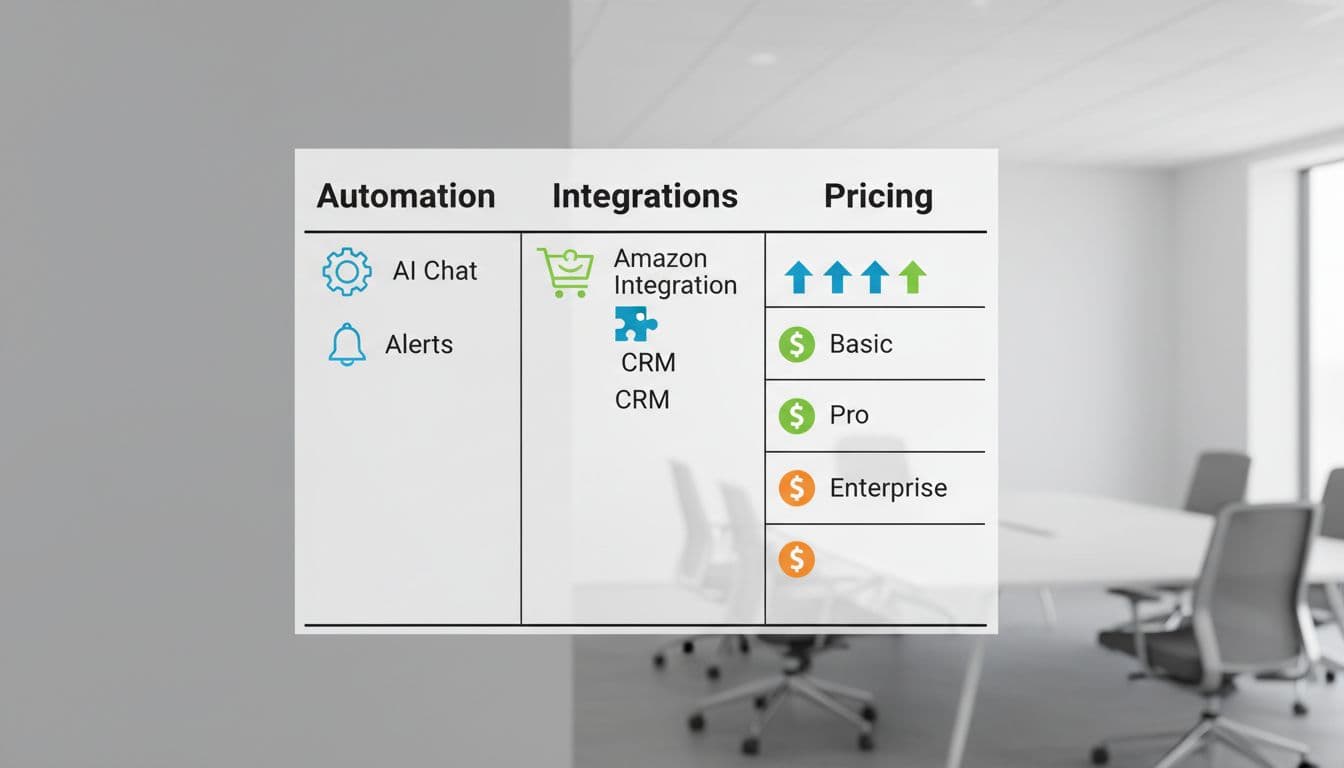
| Tool | Core strength | Ideal user | Pricing model |
|---|---|---|---|
| SalesDuo | AI review monitoring tied to broader Amazon performance data | Growing brands, agencies, Vendor Central and Seller Central teams | Quote-based or custom |
| FeedbackWhiz | Review request automation and real-time rating alerts | Private-label sellers and lean Amazon teams | Tiered monthly plans, entry level starts low |
| eDesk | Shared inbox with marketplace order context | Multichannel support teams handling Amazon plus other channels | Tiered SaaS plans |
| Zendesk | Deep ticketing workflows and reporting | Teams already on Zendesk with admin support | Agent-based, plus connector costs |
| Amazon Connect | Voice, chat, AI routing, CCaaS scale | Large ops teams with technical resources | Pay-as-you-go usage |
The big split is simple. If Amazon is your core channel, Amazon-first tools win on speed. If support spans several marketplaces, eDesk or Zendesk with their subscription-based model usually make more sense. Public pricing changes often, so treat listed models as buying signals, not final quotes.
The Amazon support tools worth shortlisting
These are the strongest options for 2026, based on current feature sets, Amazon fit, and buying practicality.

SalesDuo
SalesDuo is the best fit for brands that treat support and reputation as part of growth, not only service. Its standout angle is review monitoring with sentiment analysis powered by artificial intelligence, tied to ads, SEO, and Buy Box signals. That makes it more useful for account managers and marketplace leads than a basic alert tool. Its own 2026 review management comparison also points to support for both Seller Central and Vendor Central teams.
The trade-off is scope. SalesDuo is stronger on review intelligence and Amazon performance than on classic ticket-heavy help desk work. Pricing appears positioned above entry-level apps, so it fits brands with enough volume to act on the data.
FeedbackWhiz
FeedbackWhiz remains one of the easiest buys for Amazon sellers who want compliant follow-up and quick visibility into rating changes. It handles proactive communications like review request automation, templates, and ASIN-level monitoring well. Its public pricing page still makes it one of the lower-cost ways to add Amazon-specific automation.
Its limitation is focus. FeedbackWhiz won’t replace a shared inbox for multichannel service, and it isn’t built as a full support platform. For private-label sellers, small teams, and founders who need targeted Amazon messaging tools, that narrow focus is often a plus.
eDesk
eDesk is a strong choice when Amazon is one support channel among several. The platform pulls marketplace messages and order details into a single help desk, which helps agents answer faster without opening Seller Central for every case and boosts customer satisfaction. That matters for returns questions, delivery issues, and pre-sale messages across Amazon, Shopify, Walmart, and eBay.
The downside is cost and complexity compared with a lightweight Amazon app. If you only need review alerts or follow-up emails, eDesk is more software than you need. It fits mid-size brands, outsourced support teams, and operators who want one queue for all channels.
Zendesk
Zendesk fits companies that already run support on Zendesk and don’t want a separate stack for Amazon. Its strengths are workflow depth, agent assistance tools, reporting, QA, permissions, enterprise controls, and CRM integration. For teams with internal admins, that flexibility is useful.
However, Amazon support in Zendesk often depends on connectors, middleware, or partner apps. For example, the Amazon Seller Central and Zendesk integration via Zapier can automate ticket creation, but the final experience depends on setup quality. This option fits larger teams that already pay for Zendesk and can support the build.
Amazon Connect
Amazon Connect is not a seller tool in the same way FeedbackWhiz or eDesk are. Hosted on AWS Cloud, it is a cloud-based contact center that excels for larger operations needing voice, chat, routing, AI assist, and detailed service analytics through real-time analytics. Features like Contact Lens provide speech-to-text transcription, natural language understanding powered by machine learning and generative AI, which set it apart from traditional call centers. Its scalability, self-service options, and pay as you go pricing make it ideal for variable support volume, as shown on the official Amazon Connect product page.
Still, most Amazon sellers don’t need this level of system. It usually requires integrations, process design, and technical ownership. Choose it if you’re building a serious service operation, not if you only need Buyer-Seller Messaging management.
Frequently Asked Questions
What should I look for in Amazon customer service software?
Focus on native integration with Amazon data like buyer messages, orders, and ASIN context for one-screen views. Seek automation for routing, compliant templates, and review alerts, plus reporting on response times and agent output. Pricing should align with your team: monthly tiers for small sellers, agent-based for larger desks.
Which tool is best for Amazon-only sellers?
FeedbackWhiz excels for lean teams with review request automation, rating alerts, and low-cost plans. SalesDuo adds AI sentiment analysis tied to performance data, ideal for growing brands. Both prioritize compliant Amazon messaging over multichannel complexity.
Is eDesk or Zendesk better for multichannel support?
eDesk pulls Amazon, Shopify, Walmart, and eBay data into a shared inbox for faster resolutions across channels. Zendesk offers deeper workflows and reporting but requires connectors like Zapier for Amazon, suiting teams already invested. Choose eDesk for simpler multichannel setup, Zendesk for enterprise controls.
When should I consider Amazon Connect?
Amazon Connect fits large operations needing voice, chat, AI routing, and analytics via AWS, with pay-as-you-go scaling. It shines for variable volume but demands technical setup and integrations. Most sellers skip it for lighter tools unless building a full contact center.
How does the right software impact my business?
It cuts agent tab-jumping, speeds replies, protects reviews, and reduces A-to-Z claims while providing insights from ASIN trends. This improves customer experience, boosts satisfaction, and links support to growth via performance data.
Conclusion
The right choice of Amazon customer service software comes down to fit, not feature count. If your main problem is Amazon reviews, ratings, and compliant follow-up, FeedbackWhiz or SalesDuo will usually give faster value.
If your team handles Amazon beside other channels, eDesk is the cleaner operational buy. If you’re already invested in Zendesk, keep it and add Amazon carefully. For enterprise teams building a custom service layer, Amazon Connect is the stronger long-term option.
The best software is the one that matches your daily workflow with the fewest workarounds, ultimately improving the customer experience by converting support data into valuable customer insights.