

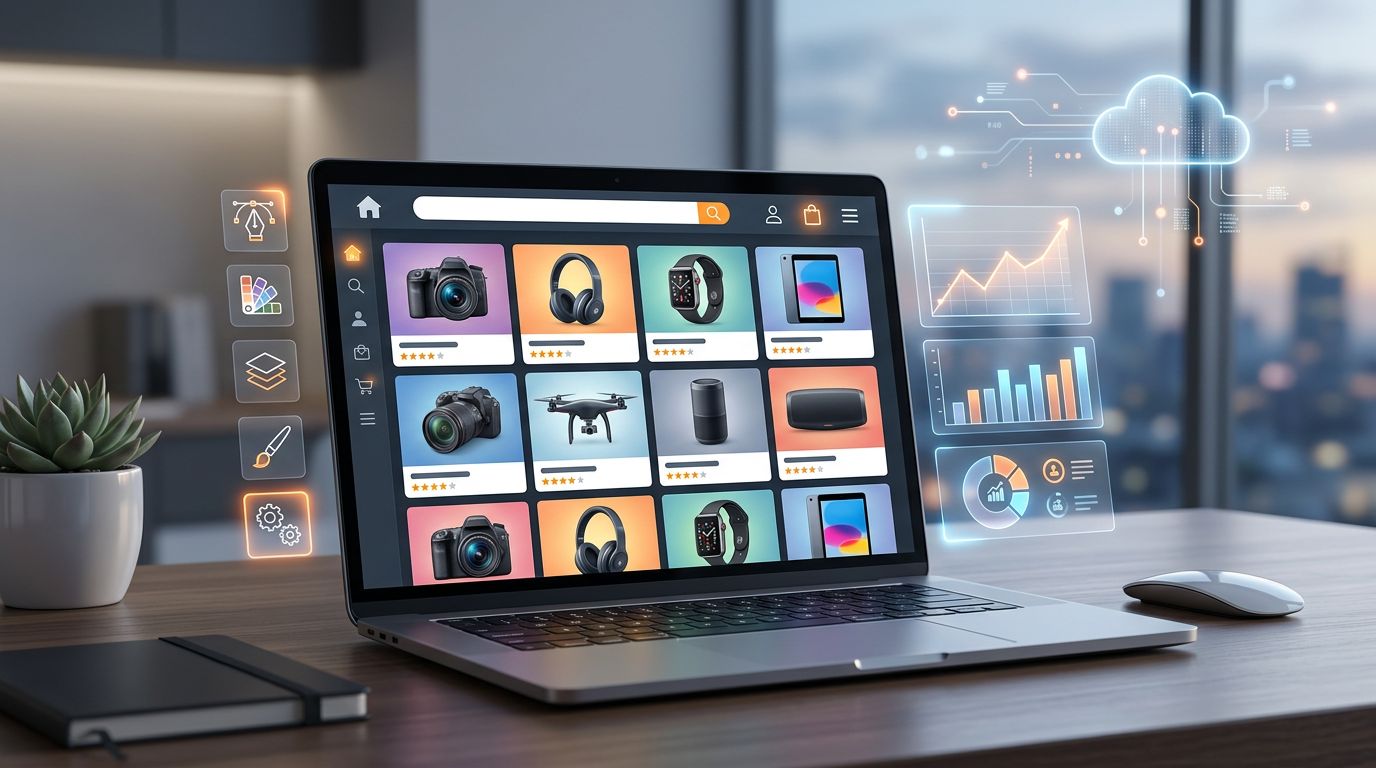
A good Amazon Store can look polished and still lose sales. Most stores miss on structure, product mix, and measurement, not on colors or banners.
If you’re comparing amazon brand store tools in 2026, it helps to sort them by job. Some tools help you build better pages, some shape merchandising, and others tell you whether the store is paying off. The tools below matter because they support real storefront decisions.
Quick comparison of the best options
No single platform covers every part of store creation, optimization, analytics, and profit tracking. For most brands, the right setup is a small stack, not one giant subscription.
| Tool | Best for | Main strength | Main limit | Where it fits |
|---|---|---|---|---|
| Amazon Stores + Brand Analytics | Brands starting with Amazon’s native stack | Free, built into Seller Central, direct shopper data | Limited design freedom and lighter reporting | Foundation for every store |
| Frooition | Brands that want expert store design | Better store architecture and conversion-focused creative | Less self-serve, pricing isn’t clear from public 2026 info | New build or full redesign |
| SellerSprite | Sellers improving assortment and store content | Strong keyword and competitor research | Not a dedicated store builder | Pre-build research and content refreshes |
| Conjura | Larger brands and agencies | Profit-first analytics across channels | Pricing isn’t public in the source material | Post-launch measurement and planning |
| sellerboard | Cost-aware FBA teams | Clear profit view by ASIN and account | Limited storefront-specific reporting | Margin tracking after store and ad changes |
The pattern is simple. Amazon gives you the store itself, while outside tools help you decide what to feature, how to organize it, and whether the page is making money.

Where each tool fits in the storefront workflow
Amazon Stores and Brand Analytics
Amazon’s own Store builder is still the base layer in 2026. If you’re Brand Registered, it’s the fastest way to publish category pages, feature hero products, add video, and route traffic from ads and posts. It’s best for brands that want direct control and no added software cost.
Brand Analytics makes that native stack more useful. Search and shopper reports help you see what customers look for, which terms drive clicks, and where demand is shifting. The limitation is depth. You won’t get the kind of profit view or cross-channel context that a larger brand often needs. Still, every brand should start here before paying for anything else.
Frooition for high-conversion store design
Frooition is the best fit when your store needs more than a template refresh. Its value is not just graphic work. Based on its 2026 guide to Amazon Brand Store design, the team focuses on discovery, asset review, page structure, creative direction, technical build, and compliance.
That’s useful for brands with a larger catalog, weak page hierarchy, or an agency workflow that needs a cleaner launch process. The tradeoff is flexibility and budget. Frooition is closer to a specialist service than a low-cost self-serve app, and public pricing is limited in the source material. In the workflow, use it when the store itself is the bottleneck.
SellerSprite for research and merchandising decisions
SellerSprite isn’t a storefront builder, but it can still improve your store more than many design tools. Why? Because a strong store starts with the right products, keywords, and category paths. Its 2026 comparison of Amazon seller tools highlights product research, keyword mining, and competitor analysis, which all shape how you group products and write store copy.
It’s best for sellers who manage lots of ASINs, sell across regions, or need a cheaper research layer than some all-in-one suites. The weak spot is clear: it won’t design pages for you, and it won’t replace a deep analytics platform. Use it early in the process, then come back to it when store content starts to age.

Conjura for store performance and profit analysis
Conjura is the tool for brands that have moved past simple traffic numbers. Its pitch is profit-first reporting, and the 2026 analytics overview from Conjura lines up with that. You can connect Amazon data with other channels and ad platforms, then look at product and channel performance in one place.
That matters for Brand Stores because store traffic rarely works alone. Paid ads, DTC traffic, and retail events all affect what happens inside the store. Conjura is best for multi-channel brands, finance-aware ecommerce teams, and agencies managing several accounts. The drawback is scale. Smaller sellers may find it heavier than they need, and public pricing is limited, so a demo is usually part of the buying process.
sellerboard for margin control after the redesign
sellerboard helps answer a blunt question: did the better storefront produce better profit, or only more spend? Its March 2026 product update points to stronger dashboards and profit visibility, which is exactly where it earns its place.
This tool is best for FBA brands that need fee-level accuracy, PPC cost tracking, and easy ASIN monitoring without paying for a larger business-intelligence setup. It’s also one of the more budget-friendly options, with 2026 comparisons placing entry pricing around $19 per month. The limit is focus. sellerboard tracks financial health well, but it doesn’t tell you much about store layout quality or shopper flow inside a page.
A practical stack for different seller types
Most brands don’t need all five tools at once. A smaller brand can do well with Amazon’s native Store builder, Brand Analytics, and SellerSprite for keyword and assortment work. That setup keeps costs low while improving structure and merchandising.
A growing brand with more ad spend usually benefits from adding sellerboard. Then you can judge store updates by margin, not by clicks alone. If you’re managing a bigger catalog, multiple channels, or agency clients, Conjura starts to make more sense. Frooition fits when the store design itself needs expert attention, especially after a catalog expansion or a weak first build.
The smartest stack is the one that closes your biggest gap first, design, research, or profit visibility.
Final thoughts
The best Amazon Brand Store tools in 2026 don’t all do the same job, and that’s the point. Amazon gives you the storefront, research tools shape what belongs in it, and analytics tools tell you if the page is moving profit.
If your store looks fine but performance feels flat, start with the gap you can measure. Better storefronts usually come from better decisions, not more software.