

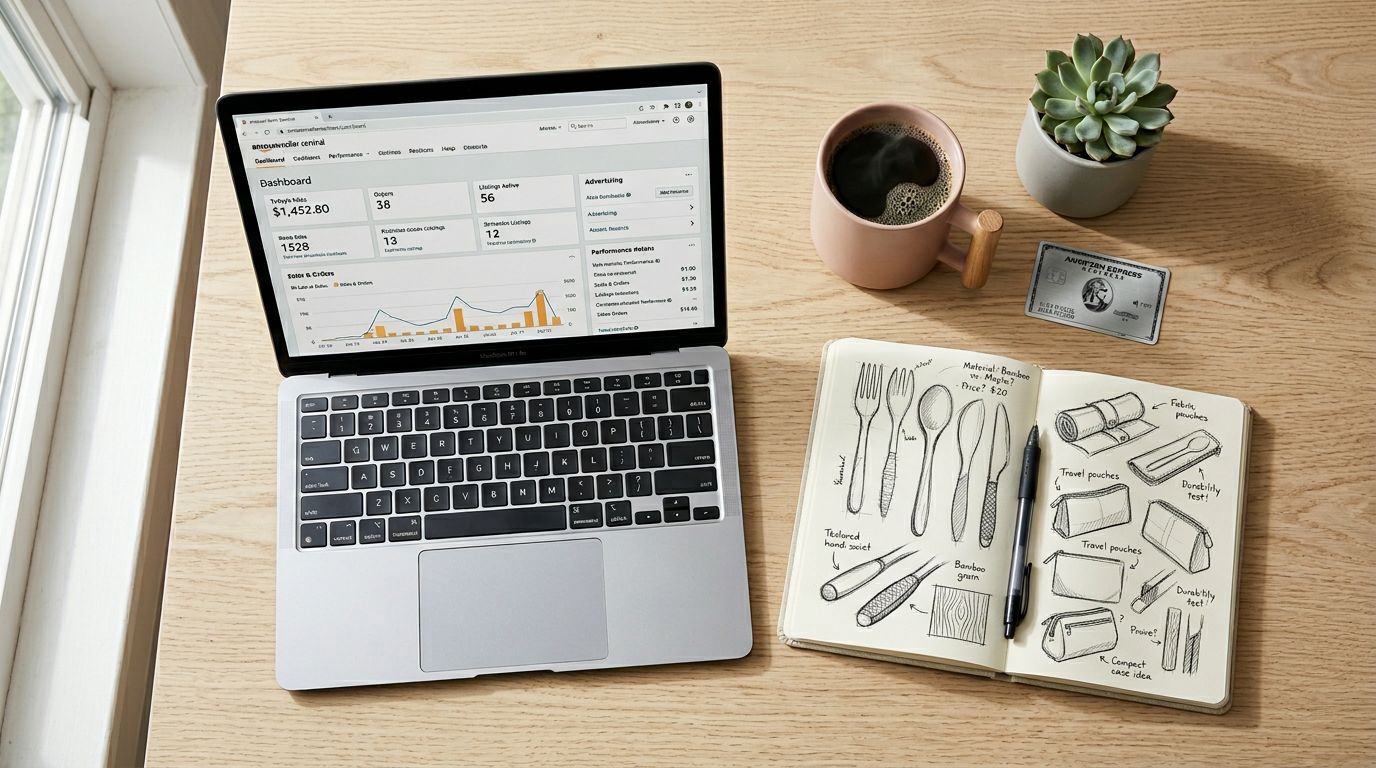
Starting Amazon FBA with no money sounds like trying to cook dinner with an empty fridge. It’s possible, but only if you’re willing to be patient, creative, and strict about what you don’t spend.
In 2026, the “no money” approach doesn’t mean zero costs forever. It means you delay spending until you’ve created a clear product plan, secured supplier terms, or generated cash flow.
This guide breaks down legal, low-risk ways to start Amazon FBA, the fees to expect, and the steps that help you avoid expensive mistakes.
What “no money” really means for Amazon FBA in 2026
You can start Amazon FBA without buying inventory upfront, but you still need a working setup. Amazon verifies your identity and pays you to a bank account, so you’ll need basic documents and access to a card (even if you keep the balance at $0).
Here’s the practical definition of “no money” in 2026:
- $0 upfront inventory by using consignment, net terms, or supplier-paid shipping (when possible).
- $0 monthly seller fee by choosing an Individual plan at first.
- Low initial risk by testing small quantities and avoiding long storage.
The fees you must plan around (even if you start at $0)
Amazon FBA isn’t free once you sell. You’ll pay referral fees and FBA fulfillment fees per unit, plus storage. Amazon also adjusted some fees for 2026, with small average FBA fulfillment increases starting mid-January 2026. Use Amazon’s official updates as your source of truth, not a random TikTok screenshot. See Amazon’s 2026 U.S. referral and FBA fee changes summary and the 2026 fee update announcement.
Two 2026 notes worth knowing early:
- Amazon’s low-price FBA discount for items under $10 still exists, which can help if you choose the right product.
- Amazon tightened how it checks low inventory levels, so sloppy replenishment planning can trigger extra costs later.
If someone says you can “start Amazon FBA with no money” and “Amazon covers all fees,” they’re selling you a story, not a plan.
Set up Seller Central the $0 way (and stay verification-safe)
To start Amazon FBA, you need a Seller Central account. The cheapest legal starting point is the Individual plan (no monthly subscription, but a per-item fee when you sell). The Professional plan costs $39.99/month, so don’t rush it unless you already expect volume.
Account setup checklist (fast, clean, low risk)
Keep this simple, because messy applications often create delays:
- Email and phone: Use one you control long term.
- Government ID: Driver’s license or passport.
- Proof of address: Recent bank or utility statement (matching your application).
- Bank account for payouts: Checking account you can access.
- Credit or debit card: Used for verification and charges when fees apply.
- Tax info: SSN or EIN, depending on how you register.
- Two-step verification: Turn it on immediately.
After approval, set up the basics before you source anything:
- Shipping address (for returns, even if you use FBA).
- Deposit method.
- Notification settings.
- A simple naming system for SKUs, so you can track inventory cleanly.
The goal is boring consistency. Amazon likes boring.
How to find a first product without buying inventory upfront
“No money” sellers usually fail because they pick the wrong first product. They choose something heavy, fragile, restricted, or packed with fee surprises. Then the first shipment eats the budget.
Instead, treat your first product like a small canoe, not a cruise ship: it should float easily, even in choppy water.
A simple first-product framework (use this before you source)
Use this quick screen before you commit time to outreach.
| Factor | What to aim for | What to avoid |
|---|---|---|
| Demand | Steady sales across multiple listings | One-hit trends with no history |
| Competition | Several sellers under 300 reviews | Dominant brands with 5,000+ reviews |
| Fees | Healthy margin after referral and FBA fees | Margins that only work “at scale” |
| Size tier | Small, light, easy to pack | Oversize, bulky, dimensional weight traps |
| Hazmat risk | Clearly non-hazmat items | Sprays, liquids, batteries, magnets |
| Restrictions | Easy to list and sell | Gated categories, high compliance burden |
For free research, start inside Amazon:
- Browse categories, Best Sellers, and price bands.
- Compare review counts and listing quality.
- Use Amazon’s Product Opportunity Explorer if it’s available in your account (it’s built for spotting demand pockets).
Sourcing methods that can work with $0 upfront
Your best “no money” options are based on terms, not tricks:
Consignment (best true $0 path): A supplier gives you a small quantity, you pay after it sells. Hard to get, but possible with local brands and small distributors.
Net terms (30 or 45 days): You receive inventory now, pay later. This is more realistic than consignment if you can show you’re serious.
Authorized wholesale with small minimums: You buy a small test order, then reinvest quickly. This is often the fastest route once you can scrape together $100 to $300.
If you need ideas for where sellers source, use a broad, non-hype overview like Alibaba’s 2026 guide on where to buy products for Amazon (then verify suppliers carefully and avoid anything that smells like counterfeit risk).
Supplier outreach script (short, direct, works better than “I’m a beginner”)
Send this to 20 suppliers, then follow up twice.
Subject: Wholesale account request (Amazon FBA)
Hi [Name],
I run an Amazon FBA resale business and I’m interested in carrying your [brand/product line].
Can you share your wholesale price list, minimum order quantity, and whether you offer net terms (Net 30) or a small test order?
I can follow your MAP policy and provide resale documentation if needed.
Thanks,
[Name]
[City, State]
[Phone]
Keep it professional. Ask for terms, not secrets.
Launch with minimal cash burn: prep, shipping, and storage
Once you have inventory secured, your job is to get it to Amazon without bleeding money.
Prep and inbound shipping steps (beginner-safe order)
- Confirm listing eligibility before you buy or accept inventory (avoid surprise gating).
- Create the listing in Seller Central (correct brand, variation, and category).
- Choose FBA and generate FNSKU labels if required (do not rely on UPC alone).
- Prep to Amazon standards (tight polybags, suffocation warnings when needed, no loose sets).
- Build the inbound shipment and print box labels.
- Use Amazon Partnered Carrier when it’s available, it can be far cheaper than retail rates.
- Send a small test shipment first, then scale after you see sell-through.
Storage is where beginners quietly lose. Slow inventory racks up monthly storage fees, then long-term penalties can hit later.
Here’s a simple rule: if you can’t picture selling through your first batch in 30 to 60 days, lower the quantity.
The cheapest inventory is the inventory you don’t buy yet.
Avoid common “no money” scams (and expensive shortcuts)
Watch for these traps:
- Store automation offers that promise hands-off income for a big upfront fee.
- Ungating services that sell fake invoices (this can get your account suspended).
- “Guaranteed supplier lists” that are scraped, outdated, or full of resellers.
- Review manipulation tactics (Amazon catches this, and it’s not worth it).
In 2026, Amazon is strict about authenticity, account verification, and policy enforcement. Build slow and clean.
Starter budget breakdown (realistic $0 to $500 scenarios) and timeline
Even with “no money” sourcing, small costs pop up. Plan for them so you don’t stall at the finish line.
This table shows two practical starter paths.
| Scenario | What you can do | Typical costs | Best for |
|---|---|---|---|
| $0 to $100 | Individual account, free research, consignment or net terms outreach, minimal supplies | $0 to $100 (labels, tape, small shipping gaps) | Patient starters with time |
| $100 to $500 | Small test buy (10 to 50 units), basic prep supplies, first inbound shipment | $100 to $500 | Faster validation and learning |
A realistic timeline (if you do consistent work)
- Week 1: Account setup, category checks, basic research, build a supplier list.
- Weeks 2 to 4: Supplier outreach and follow-ups, negotiate a small test.
- Weeks 4 to 6: First shipment to Amazon, listing ready, first sales data.
- Weeks 6 to 10: Reorder winners, drop losers, tighten pricing and replenishment.
If you want to start Amazon FBA with no money, the real advantage is time. Daily outreach and careful product picks beat “secret strategies” every time.
Conclusion
You can start Amazon FBA with no money in 2026, but only if you treat it like a terms-and-testing business, not a shopping spree. Pick a simple product, keep shipments small, and push hard for consignment or net terms. Most importantly, stay clean on invoices, authenticity, and policies. The first win isn’t a big payout, it’s proving you can sell one product profitably and repeat it.