


A hijacker can land on your listing while you’re asleep, and the first sign is lost Buy Box share by breakfast. That is why amazon hijacker alert tools matter.
The good ones don’t promise magic. They buy you time, show what changed, and help your team act before bad offers, counterfeit stock, or listing edits do real damage. What matters most is separating useful alerts from noisy software.
What separates a useful hijacker alert tool from noise
Reliable public 2026 hijacking counts are still hard to pin down. The risk is obvious anyway. Sales can drop fast when an unknown seller jumps onto a private label ASIN or wins the Buy Box on price.
A useful tool watches more than one trigger. You want seller additions on an ASIN, Buy Box shifts, content changes, suppressed listings, and marketplace-by-marketplace visibility. Hourly checks can be enough for some catalogs. Larger brands often want faster signals and clearer seller context.
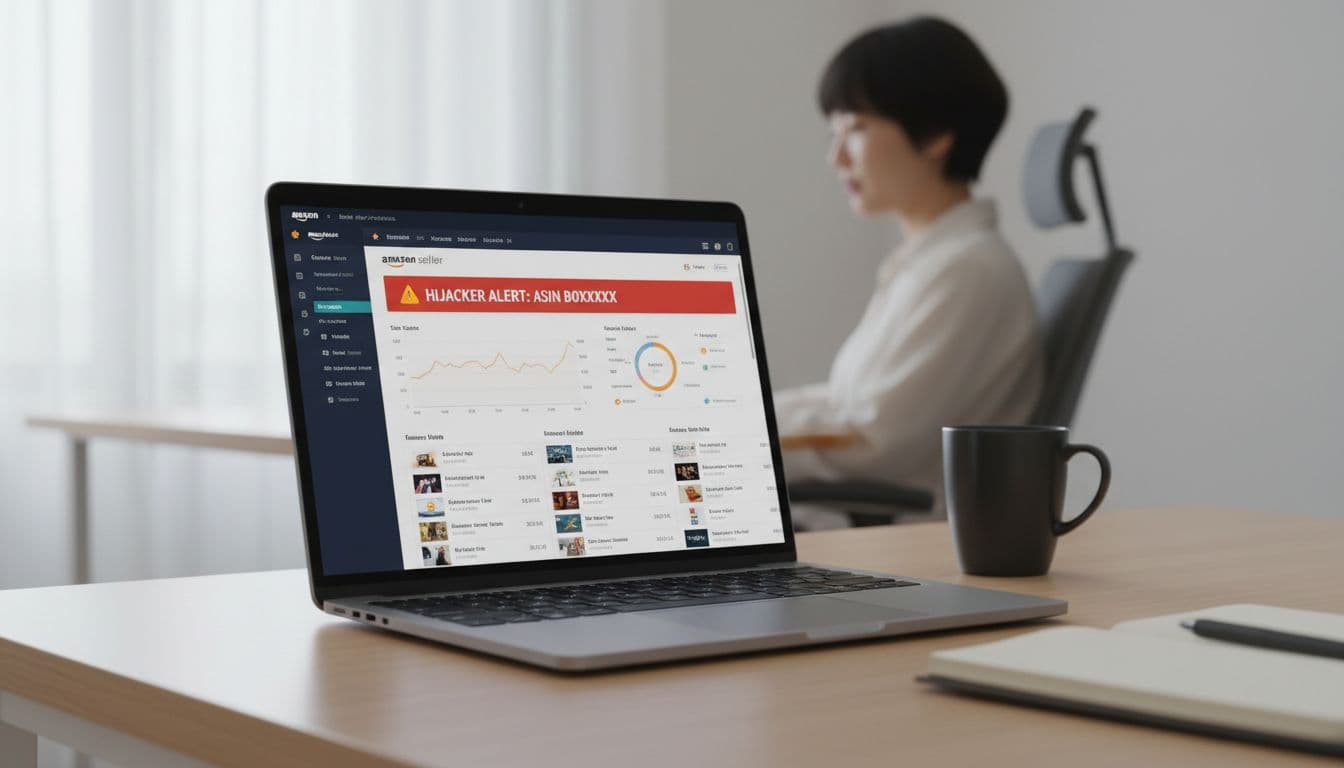
The next filter is actionability. An alert that says “something changed” is weak. A better alert shows the ASIN, seller name, fulfillment type, price gap, and the marketplace affected. That cuts investigation time.
Notification channels matter too. Email is still standard in this category. Mobile alerts, workflow routing, and team-friendly reporting vary a lot, so test them during a trial. Also, detection is not removal. Brand Registry and Project Zero help after the alert, but they don’t replace monitoring.
Pricing transparency is another divider. Some vendors make plan limits clear, while others push you into a demo before you know ASIN caps or alert depth. That matters if you manage a wide catalog, because low entry pricing can rise fast once you add markets or users.
The best alert is the one your team can act on in minutes, not the one with the longest feature list.
Best Amazon hijacker alert tools in 2026
Current 2026 options split into two groups: dedicated listing monitors and broader seller suites with alert modules. This table highlights the tools that stand out for hijacker defense.
| Tool | Alert speed and depth | What stands out | Best fit |
|---|---|---|---|
| Bindwise | 24/7 hijacker and piggybacker monitoring, unlimited ASIN tracking, real-time email alerts | Focused on private label listing protection | Growing brands |
| Seller Sonar | Hourly checks for hijacking and Buy Box loss across Amazon markets | Strong marketplace coverage and broad alert set | Agencies, global sellers |
| SentryKit | Real-time listing and performance alerts, 25+ alert types | More context around listing health, not only hijackers | Brands that want one alert hub |
| DataHawk | Instant hijacker alerts plus sales and inventory dashboards | Better for teams that want protection tied to analytics | Data-driven brands |
| Helium 10 Alerts | Tracks hijackers, content edits, Buy Box shifts, suppressed ASINs | Good add-on if you already use the suite | Existing suite users |
| AmzMonitor | Timely hijacker alerts, simple setup, free trial | Lower-friction entry point | Newer sellers |
The main takeaway is simple. Some tools specialize in hijackers, while others treat hijacking as one signal inside a broader monitoring stack.
Among dedicated options, Bindwise hijacker monitoring is one of the clearest fits for private label sellers. Its pitch is simple: watch unlimited ASINs around the clock and send real-time email alerts when piggybackers or unauthorized sellers appear. That focus makes it easy to adopt, especially if your main goal is stopping listing abuse fast.
Seller Sonar is appealing when catalog reach matters more than a single-use tool. Based on 2026 reviews and product descriptions, it checks hourly, tracks Buy Box changes, and covers all Amazon markets. That extra marketplace visibility can save time for agencies and brands managing US, UK, and EU accounts.
Then there are hybrid tools. SentryKit Alerts takes a broader approach, with 25+ alert types tied to listing health, performance, and seller activity. If your team also wants signals on suppression, stock issues, or competitor moves, that wider coverage can reduce dashboard sprawl. DataHawk sits in a similar camp, although its selling point is stronger analytics rather than pure alert specialization.
Helium 10 Alerts still deserves mention because many sellers already pay for the suite. It tracks hijackers, listing changes, Buy Box shifts, and suppressed ASINs. Still, buyers who only want hijacker protection may find dedicated tools simpler and easier to judge.
Pricing is less neat than the feature pages suggest. AmzMonitor hijacker alerts makes the free-trial path obvious, while other tools reveal limits more slowly. For that reason, the smartest test is practical: add a few ASINs, trigger sample events if possible, and judge how fast your team gets usable detail.
Which tool fits your seller stage
The best choice changes with catalog size and team structure. A solo seller and a multi-brand operator don’t need the same depth.
New private label seller
AmzMonitor is a sensible starting point if you want quick setup and a trial before spending. Bindwise is also strong if you already know you’ll expand your catalog and need wider ASIN coverage from day one.
Growing brand
Bindwise and SentryKit look strongest here. Bindwise stays close to the hijacker problem, while SentryKit works better when listing health, Buy Box changes, and other revenue alerts need to sit in one place.

Agency
Seller Sonar earns a close look because cross-market coverage matters when clients sell in several Amazon regions. SentryKit also fits agencies that want richer context and a broader alert menu for client reporting.
Enterprise brand owner
DataHawk and Seller Sonar make more sense than a basic alert-only tool. Large teams usually need reporting, catalog oversight, and cleaner handoffs between brand protection, account management, and operations. If you already run an all-in-one suite, Helium 10 can still work, but only if the alert module fits your response process.
When a hijacker shows up, response time matters more than feature count. Pick the tool that matches your catalog size, markets, and the way your team handles alerts.
A simple tool can be the right one if it gets the right message to the right person fast. The wrong one hides limits until after the trial, or buries a real threat in noisy notifications.