


Lose the Buy Box for a few hours, and sales can drop before anyone on your team spots the problem. Amazon Buy Box monitoring tools are essential for detecting losses instantly. In 2026, that still happens fast, because Amazon pushes most orders through the Featured Offer and weighs more than price alone.
The best Amazon Buy Box monitoring tools don’t only send alerts. Since the Amazon algorithm evaluates more than just the lowest price, they show who took the spot, how quickly it changed, and whether the cause was price, stock, seller health, or a listing issue. That difference is what separates a helpful tool from another noisy dashboard.
Key Takeaways
- Amazon Buy Box monitoring tools detect losses instantly and reveal winners, causes like price, stock, or seller health, separating useful alerts from noisy dashboards.
- Prioritize real-time accuracy via SP-API, historical logs for patterns, marketplace coverage, and ease of use tailored to brands, resellers, agencies, or small teams.
- Top picks match workflows: SellerSonar for fast reaction, Keepa for historical depth, SentryKit for compliance, Repricer.com for automation, SellerMagnet for budget broad monitoring.
- No one-size-fits-all; choose based on manual response, analysis needs, or automated action to protect sales velocity and account stability.
How this comparison judges Buy Box tools
This comparison favors practical fit over hype. It weighs six things: real-time alerts, data accuracy (most tools sync directly with Amazon Seller Central), marketplace coverage, ease of use, integrations, and how well each tool fits brands, resellers, or agencies.
It is not a strict one-size-fits-all ranking. A seller with 30 ASINs needs something different from an agency requiring bulk ASIN monitoring across 20 accounts. So the list below leans on use case first. If your team reacts manually, alert quality matters most. If you want repricing tools to act for you, their depth matters more.
Here’s the short version:
| Tool | Best fit | Alert style | Pricing note | | | — | — | — | | SellerSonar | Brands, agencies | Real-time Buy Box and price alerts | Public 2026 pricing was not clear | | Keepa | Resellers, analysts | Strong tracking, lighter alert workflow | Standard paid tier around EUR19/mo, API tiers cost more | | SentryKit | Brands, compliance-focused teams | Email alerts, historical ownership log | Public 2026 pricing was not clear | | Repricer.com | High-volume sellers, resellers | Fast automated price response | Pricing varies by plan | | SellerMagnet | Small teams, budget-conscious brands | Real-time in-app, email, Discord alerts | Alerts are described as free inside its dashboard |
The takeaway is simple. Start with the problem you need to solve first, then pick the tool that handles that problem without adding extra work.
What separates a useful monitor from a noisy one
Fast alerts matter, but fast and trustworthy matters more. Some tools focus on public page changes, while others connect through Amazon account data, often through SP-API. That second group can be more reliable for ownership changes tied to your seller account, including identifying the Buy Box winner by name.
The fastest alert is useless if the data is late, vague, or wrong.
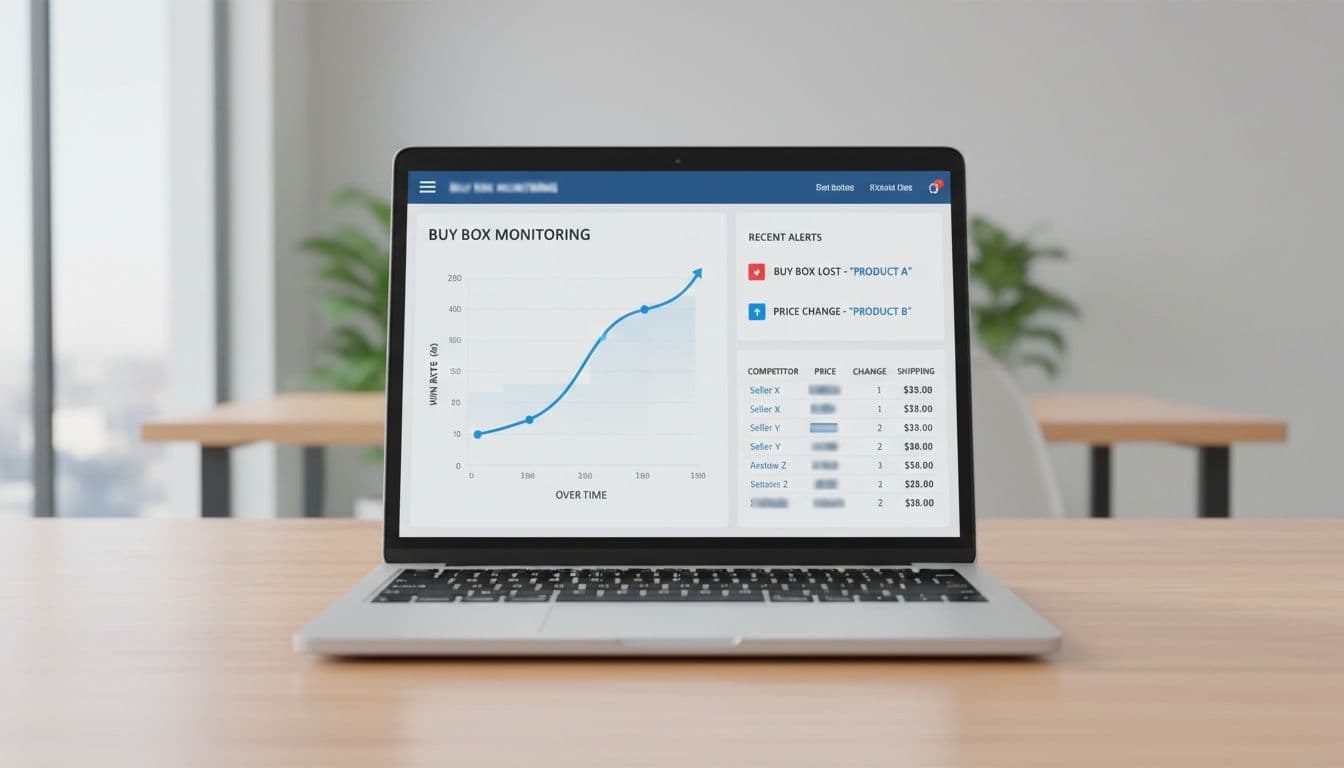
A good tool should also keep history. Without a log, you can see that you lost the Buy Box, but not why it keeps happening every Tuesday afternoon. Historical views help you spot patterns in pricing, FBA stockouts among FBA sellers due to poor inventory management, or new seller activity like unauthorized sellers targeting private label items.
Marketplace coverage is another blind spot. Many sellers operate in the US only, but agencies and larger brands often need multiple Amazon marketplaces. Before you commit, confirm that the tool covers the marketplaces tied to your account and can handle bulk ASIN tracking.
Ease of use matters more than vendors admit. A light alert tool can be set up in an afternoon. A deep analytics platform may take longer, but it pays off if you manage a large catalog. In 2026, Amazon’s Buy Box logic also weighs fulfillment speed through shipping speed and seller health via seller performance and account health, so price-only tools can miss part of the story.
The best Amazon Buy Box monitoring tools for 2026
No single platform wins every category. These are the strongest options based on current 2026 feature visibility, public pricing notes where available, and how well each tool handles real seller workflows.
SellerSonar
SellerSonar is one of the clearest picks if your main goal is reaction speed. It focuses on Buy Box wins and losses, price changes, and listing alerts, then gives enough context to act quickly, especially for maintaining competitive pricing.
Its standout features are real-time notifications, competitor price tracking, and seller-level alerting. The pros are speed, clear focus, and a setup that won’t bury small teams in menus. The cons are thinner public pricing details and less evidence of broad business intelligence than larger suites. It fits brands and agencies that protect key ASINs and need fast notice when ownership shifts. You can see the current feature set on SellerSonar’s Buy Box and pricing alerts page.
Keepa
Keepa is still the best baseline data tool for price and Buy Box history, serving as a foundational Buy Box tracker. If you want to know what changed over time, few tools are better at showing the trail of live sale price history.
The standout features are long-term charts, a well-known browser extension, and API access for custom workflows. Its biggest strengths are historical depth, low entry cost, and solid research value for resellers and analysts. The tradeoff is that Keepa is weaker as a hands-off alert and action system. Search results point to a standard paid tier around EUR19 per month, while API access climbs much higher. It fits resellers, agencies doing research, and teams that want proof before they act.

SentryKit
SentryKit leans toward accurate, account-linked monitoring. According to its public page, it connects through SP-API, watches tracked ASINs continuously, and sends email notifications within 30 minutes when Buy Box ownership changes.
That makes it attractive for brands that care about clean data and compliance, especially those in the brand registry. Standout features include the ownership history log, timestamped changes, and seller and price context. The pros are trust in the data source and useful history for finding root causes. The cons are slower alert speed than mobile push tools and unclear public pricing. It fits brands, ops teams, and agencies that want reliable monitoring more than flashy analytics. More details are on SentryKit’s Buy Box alert page.
Repricer.com
Repricer.com is the most action-oriented option in this group. It is a repricer first, but that matters because a monitor that only tells you about a problem may still leave you late.
Its standout features are automated price changes, price-floor controls, and a Buy Box Predictor on higher plans. The big advantage is speed, because it can react in seconds instead of waiting for someone to open an email, helping improve Buy Box win rate by managing key Buy Box eligibility factors. The downside is that it is more pricing-heavy than listing-monitoring suites, so you may still want a separate alert tool for hijackers or suppression issues. Pricing varies by plan. It fits high-volume sellers and resellers that want automation, not only visibility.
SellerMagnet
SellerMagnet is a strong budget-conscious option, especially for smaller teams. Its alerts are described as real-time and built into the analytics dashboard, processing structured data from Amazon Seller Central, with in-app, email, and Discord notifications.
The standout features cover more than the Buy Box, including hijacker detection, fee changes, inventory drops, and review alerts. That broad watchtower is the main pro. Another plus is the low barrier to entry if alerts are included as described. The cons are lighter public detail on long-range Buy Box reporting and unclear full pricing beyond the alerts feature. It fits smaller brands and lean agencies that want broad seller monitoring in one place. The current alerts overview is on SellerMagnet’s Amazon alerts page.
One more option deserves a mention. If your team lives on mobile, Notifcentral stands out for push notifications tied to automatic tracking of SP-API account data, although public pricing is still hard to pin down.
Frequently Asked Questions
What makes a Buy Box monitoring tool trustworthy?
Trustworthy tools connect directly via SP-API for accurate, account-linked data on ownership changes, not just public page scrapes. They provide context like winner details, timestamps, and history to spot patterns such as recurring stockouts or competitor pricing. Fast but vague alerts are less valuable than reliable ones that help fix root causes.
How do I pick the right tool for my team?
Match to your use case: brands and agencies need fast alerts like SellerSonar; resellers want history like Keepa; high-volume sellers prefer automation in Repricer.com. Consider alert speed for manual teams, data depth for analysts, and setup ease for small operations. Always check marketplace coverage and integrations before committing.
Why track Buy Box history?
History reveals patterns like weekly losses from poor inventory or new hijackers, which one-off alerts miss. It helps refine pricing, fulfillment, and seller health strategies beyond just reacting to changes. Without logs, repeated issues drain sales without clear fixes.
Can these tools automate responses?
Yes, tools like Repricer.com automate price adjustments and Buy Box predictions to regain the spot in seconds. Others focus on alerts for manual action, so pair with repricers if automation is key. This boosts win rates by addressing eligibility factors proactively.
Final thoughts
The best Buy Box tool in 2026 depends on how you respond to problems. If your team acts manually, choose the fastest clear alerts. If you need hard evidence, pick the tool with the best history. If you want software to react before a human does, a repricer with Buy Box visibility is the better fit.
The main thing to avoid is flying blind, since monitoring helps maintain sales velocity and protects against dips caused by poor customer feedback or a high order defect rate. Understanding Buy Box rotation is key to your long-term strategy. A short Buy Box loss can cost more than a month of software, especially when it hits your best ASINs. Ultimately, Amazon Buy Box monitoring tools are an investment in account stability.