


Bad forecasts are expensive. One late reorder can sink ranking, while one oversized purchase order can lock cash into slow stock.
That is why amazon demand forecasting tools matter more in 2026. You need software that reads seasonality, lead times, promotions, and FBA inventory flow without sending you back to spreadsheets. The shortlist below focuses on tools that are active, practical, and worth a serious look now.
How these tools were judged
This roundup focuses on software that appears active in 2026 and directly supports Amazon sellers, either inside Seller Central or through Amazon-connected inventory planning. The review looked at five factors: forecast depth, replenishment automation, purchase order planning, Amazon integrations, pricing visibility, and how well each tool fits different team sizes.
Current public product pages, help docs, independent listings, and recent 2026 references shaped the list. When a vendor does not clearly publish paid pricing, that is stated plainly instead of guessed. That matters, because pricing opacity can slow down buying decisions almost as much as weak forecasting.
Forecast accuracy drops fast when lead times, promo plans, or past stockouts are missing from the model.
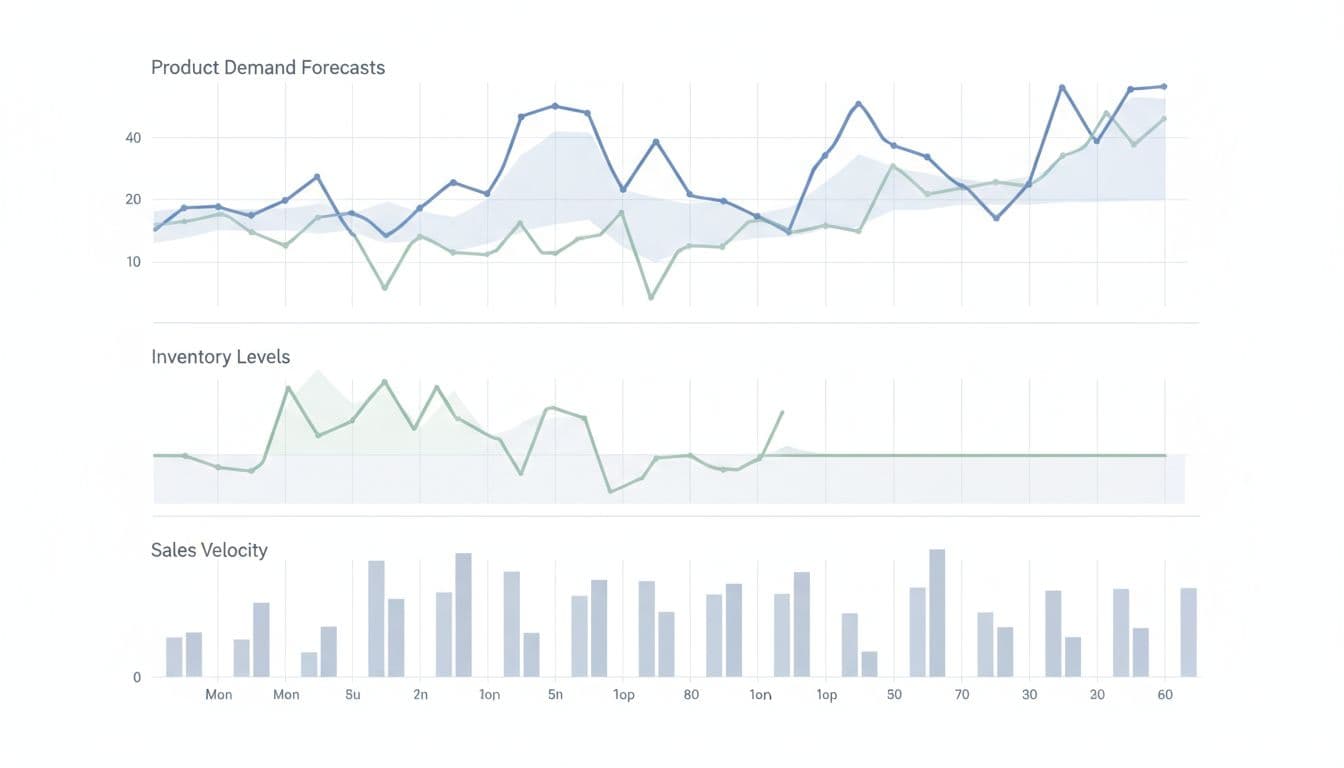
A strong tool should help you act on the forecast, not only show a chart.
The best Amazon demand forecasting tools in 2026
This quick comparison shows where each option fits best.
| Tool | Pricing visibility | Best fit | Main drawback |
|---|---|---|---|
| Amazon Seller Central | Free for eligible sellers | Small FBA sellers | Limited customization |
| Prediko | Public pricing not fully clear | Growing brands | Narrower scope than all-in-one suites |
| SoStocked | Starts at $158/month | Growing brands with complex inventory | Steeper learning curve |
| Streamline | Free edition noted, paid pricing mostly by quote | Enterprise teams | More depth than many sellers need |
| Jungle Scout | Plan-based, lower entry cost than specialists | Small to growing sellers | Forecasting is less specialized |
For simple catalogs, lighter tools can be enough. Once lead times, suppliers, and multi-month planning start hurting cash flow, specialist platforms pull ahead.
Amazon Seller Central Demand Forecast
Amazon’s own forecast tool is the easiest place to start because it is already inside Seller Central. Recent references point to forecasts up to 40 weeks for eligible Brand Registered sellers with enough sales history, and the data is native to FBA.
That makes it a solid fit for small sellers and brands that want a baseline restock view before paying for separate software. Still, it is FBA-only and less flexible than third-party tools. You get less control over scenario planning, supplier workflows, and purchase order execution.
Prediko
Prediko is one of the more appealing tools for brands that want planning and replenishment in one place. Its feature documentation and Shopify app listing point to AI-driven forecasting, replenishment alerts, purchase orders, and inventory planning tied to real-time commerce data. Public pricing for Amazon-focused use is still not clearly laid out, although the app listing shows a free trial.
That profile makes Prediko a strong fit for growing brands that need faster reorder decisions without building a full supply-chain stack. The main limit is scope. It is more focused on forecasting and stock planning than on broader Amazon functions like research, ads, or profitability.
SoStocked
SoStocked remains one of the more detailed Amazon-first planning tools. Its public pricing page and demo overview describe 12-month forecasting, custom buffers, lead-time planning, seasonality inputs, promotions, and support for Amazon Warehousing and Distribution.
That depth works best for growing brands and agencies dealing with more complicated FBA replenishment. It is less friendly for tiny catalogs, though. The setup takes more thought, and the current starting price of $158 per month may feel high if you only need simple reorder reminders.
Streamline
Streamline leans more toward serious supply planning than seller-friendly dashboards, and that is exactly why some teams want it. The Streamline docs show broader planning across suppliers, warehouses, and downstream inventory locations, which matters when Amazon is only one channel in a wider operation. Public sources also mention a free edition, while paid pricing is mostly quote-based.
For enterprise teams and fast-scaling brands, Streamline has the right shape. It handles more moving parts than most Amazon-specific tools. On the other hand, smaller sellers may find it heavy for everyday FBA restocking and harder to adopt without an operations lead.
Jungle Scout
Jungle Scout is still relevant because some sellers want forecasting inside a larger Amazon toolkit. Recent 2026 references place inventory forecasting inside its broader product suite, with pricing starting around the lower end of the market compared with specialist planners, although exact tier costs can vary.
That makes it a practical fit for small to growing sellers who prefer one subscription for research, listing work, and basic restock planning. The trade-off is depth. If your team needs custom supply assumptions, deeper purchase planning, or more advanced replenishment logic, a specialist tool will usually do more.
Which type of seller should choose which tool?
If your catalog is small and cash is tight, start with Amazon’s built-in forecast or Jungle Scout. Both are easier to adopt, and both can cover basic reorder timing without a big software commitment.
Prediko makes more sense once stockouts, promo spikes, and purchase orders start colliding. SoStocked is better when lead times, AWD, and custom buffers drive daily decisions. Streamline belongs further up-market, where finance, operations, and supply planning all need the same forecast model.
The tool should match the cost of a bad forecast
The best choice depends less on brand buzz and more on how expensive planning errors are for your business. A one-SKU seller does not need the same system as a brand managing long lead times across dozens of ASINs.
In 2026, the strongest amazon demand forecasting tools do more than predict sales. They connect forecasting to replenishment, purchasing, and inventory risk, which is what keeps FBA growth from turning into expensive chaos.