


When Amazon tightens restock limits, overflow inventory turns into a cash trap fast. Boxes pile up, inbound plans stall, and your best sellers risk going out of stock.
A strong Amazon FBA 3PL fixes that problem. It stores reserve inventory, handles prep and relabeling, forwards cartons back to FBA, and can ship FBM orders when Amazon capacity gets tight. That matters even more in 2026, because storage pressure hasn’t eased.
Why overflow inventory needs a real 3PL plan in 2026
Amazon’s current restock model is harder on sellers with uneven demand, seasonal spikes, or wide catalogs. Limits now sit closer to ASIN-level performance and storage type, so one slow SKU can tie up space while a fast mover needs replenishment. Recent 2026 FBA capacity updates also pushed more brands to keep backup stock outside Amazon.
That changes how smart operators plan inventory. Many now keep roughly 45 to 60 days in FBA, then hold the rest with a 3PL for weekly or biweekly replenishment. As a result, they avoid aged storage costs, reduce receiving backups, and still stay in stock during Q4 or Prime events.
A good overflow partner does more than rent pallet space. You want receiving, FNSKU labeling, poly bagging, carton forwarding, shipment creation support, removal-order processing, returns inspection, and multi-channel fulfillment in one workflow.
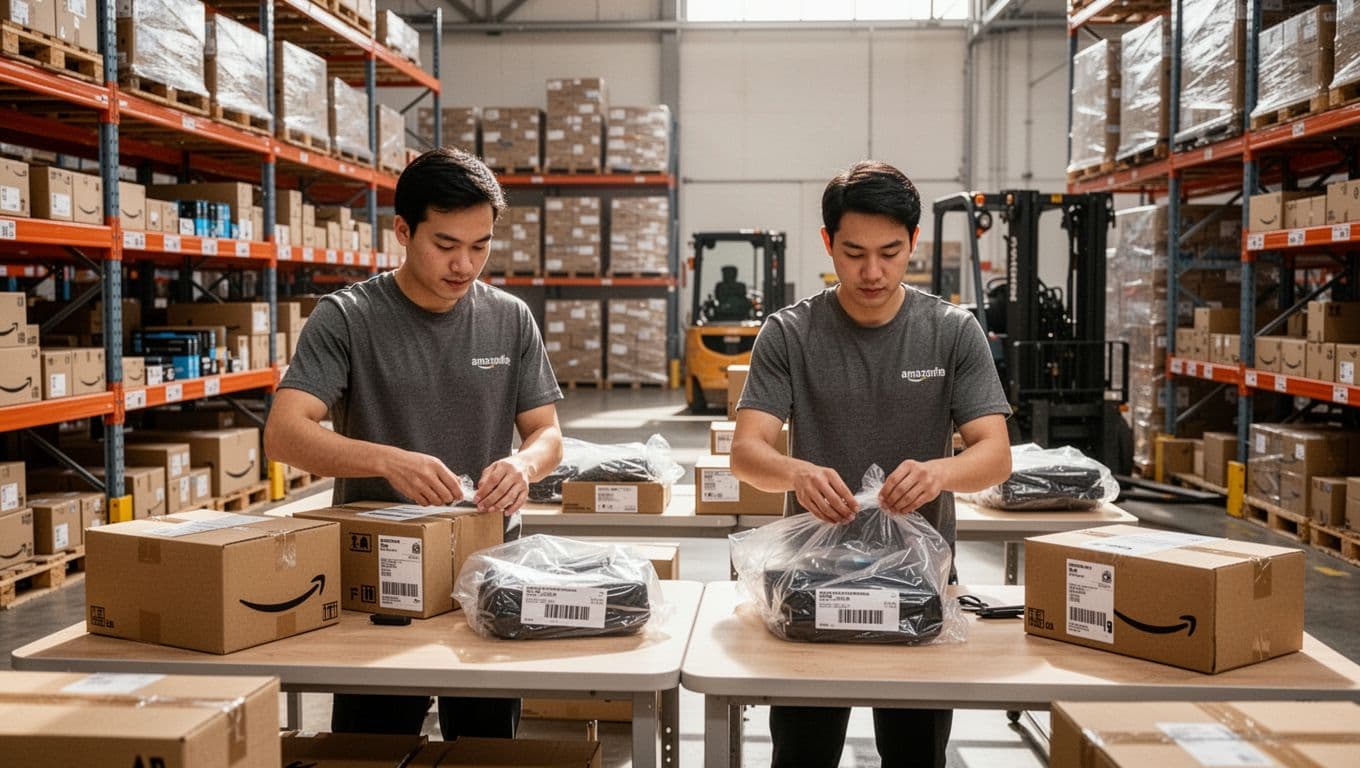
Without that setup, overflow stock becomes dead stock. With it, reserve inventory becomes a buffer you can actually use.
The best Amazon FBA 3PL services compared
This quick table highlights the best-fit use case for each provider.
| Provider | Best for | Warehouse locations | Amazon prep services | Key strengths | Potential drawbacks |
|---|---|---|---|---|---|
| Cart.com | Growing brands that need overflow plus FBM support | Nationwide US | Prep, relabeling, replenishment, returns | Broad service mix, strong brand support, multi-channel reach | Pricing is quote-based and not public |
| ShipCalm | FBA overflow backup and SFP/FBM continuity | Carlsbad, CA, plus US network | FNSKU labels, bagging, kitting, reverse logistics | Good safety-net option when FBA goes tight | Pricing not public, smaller network than ShipBob |
| ShipBob | Larger brands with Amazon, Shopify, Walmart, and global needs | 50+ locations across US, UK, EU, AU, CA | FBA prep, forwarding, returns | Large network, good inventory placement, fast ground reach | $275 monthly minimum, can be expensive at lower volume |
| Red Stag Fulfillment | Heavy or bulky products | US network | Prep, relabeling, returns | Strong fit for oversized SKUs and accuracy-sensitive ops | Less attractive for brands needing broad international nodes |
| eFulfillment Service | Smaller sellers that want low commitment | Michigan plus US reach | FBA prep, relabeling, returns | No setup fees or minimums, easy entry point | Fewer warehouse nodes than larger 3PLs |
| ShipMonk | Fast-growing brands and cross-border operations | US, Canada, Europe, Mexico | Prep, relabeling, returns, SFP support | High accuracy, wide channel support | $250 monthly minimum, add-ons can raise costs |
Most providers still use custom pricing. Aside from public minimums from ShipBob and ShipMonk, storage, receiving, prep, and outbound fees usually require a quote.
A low storage rate can hide expensive receiving, prep, and pick-pack fees. Always review a sample invoice, not only the rate card.
Which providers make the most sense for real overflow use cases
Cart.com and ShipCalm are strong choices when your main pain point is keeping Amazon in stock without overfeeding FBA. Both fit brands that need reserve inventory nearby, plus the option to move into FBM or SFP during stockouts. That setup is useful when Amazon check-in times stretch or restock caps pinch top sellers.
ShipBob makes more sense when Amazon is only one channel. If you also ship DTC, retail, or international orders, its larger footprint can reduce split inventory headaches. The tradeoff is cost. Smaller sellers often feel the monthly minimum and network fees sooner.
Red Stag is the practical pick for heavy, fragile, or awkward products. Furniture parts, weighted fitness gear, and large kitchen items usually need more careful handling than generalist 3PLs offer. If your problem is damage claims as much as overflow, Red Stag deserves a close look.
eFulfillment Service works well for lean teams. No setup fees or minimums lower the risk, which matters when you need overflow help but don’t want enterprise overhead. ShipMonk sits further upmarket and fits brands with faster growth, subscription orders, or cross-border needs.
There’s also room for prep-focused specialists. AMZ Prep is worth comparing if you want global warehouse coverage with Amazon-first prep services. Likewise, PrepVia appeals to sellers who care most about fast prep turn times and visibility into inbound flow.
How to choose an Amazon FBA 3PL without creating new problems
Start with receiving speed. Overflow inventory only helps if the 3PL can check in, inspect, and prep inventory fast enough to feed FBA before you stock out. Ask for a real SLA on receiving and prep, not a vague estimate.
Then check carton forwarding and replenishment rules. Some 3PLs are great at storage but weak at breaking pallets into FBA-ready cartons, relabeling units, or sending partial replenishment runs several times a week. If you manage around restock limits, that detail matters more than raw warehouse count.
Returns handling is the next filter. Removal orders and customer returns can become resellable stock, or they can sit untouched for months. A service like PrepIt Logistics’ returns and removal workflow shows the standard to look for: inspection, sorting, disposition rules, and clear reporting.
Finally, review prep depth. Amazon compliance mistakes still cost time and money, so your partner should handle labeling, bagging, bundling, carton prep, and routing cleanly. Fulfillrite’s FBA prep overview is a useful benchmark for the kind of prep detail sellers should expect.
The best fit usually isn’t the biggest network. It’s the 3PL that matches your reorder rhythm, SKU profile, and channel mix.
Reserve inventory is only helpful when it moves fast and arrives FBA-ready. That’s why the best Amazon FBA 3PL for 2026 is usually the provider that can receive, prep, forward, and report with very little friction.
If your catalog runs into peak season spikes, long-term storage risk, or tight restock caps, a well-matched 3PL gives you breathing room. That breathing room often matters more than another pallet position inside Amazon.