


A small listing change can lift sales, or cut them. That is why amazon split testing tools matter so much in 2026.
Still, not all testing tools answer the same question. Some use live Amazon traffic, some use shopper polls, and some focus mostly on price. If you pick the wrong type, you can end up with fast feedback that does not match real buying behavior.
The best choice depends on your traffic, budget, and how much proof you need before changing a listing.
Quick comparison of the top tools
This table gives you the fast read before the deeper notes.
| Tool | Best for | How it tests | Public pricing in 2026 | Main limitation |
|---|---|---|---|---|
| Amazon Manage Your Experiments | Brand-registered sellers with traffic | Native Amazon experiments on live PDP traffic | Free | Eligibility rules and slower test cycles |
| Splitly | Sellers wanting classic live listing tests | Listing element tests for titles, images, bullets, pricing | Public pricing not clearly listed, older comparisons cite about $49/month | Hard to verify current plan details publicly |
| PickFu | Pre-launch feedback and creative checks | Shopper polls, not live Amazon traffic | From about $50 per poll | Opinion data, not sales data |
| Jungle Ace | PPC-driven teams | Ad-driven split tests for titles, images, price | Pricing not publicly listed | Depends on active ad setup and spend |
| SellerSnap | Price testing and repricing | AI repricing with price experiments | Around $99/month on public comparisons | Narrower focus than full listing tools |
| Viral Launch | Sellers who want research plus testing inputs | Research-led testing support, lighter A/B workflow | Around $59/month on public comparisons | Better for research than pure split testing |
| AMZFinder | Budget sellers needing basic checks | Limited, older A/B-style support | Roughly $20 to $50/month, unclear | Low current visibility for split testing |
| AMZTested | Quick concept validation | Off-Amazon concept tests | Roughly $30 to $60 per test, not well confirmed | Sparse public information in 2026 |
The short version is simple. Amazon Manage Your Experiments is still the strongest proof source when you qualify. Meanwhile, PickFu is the fastest way to get directional feedback, and Jungle Ace looks interesting for PPC-heavy teams that want tighter traffic control.
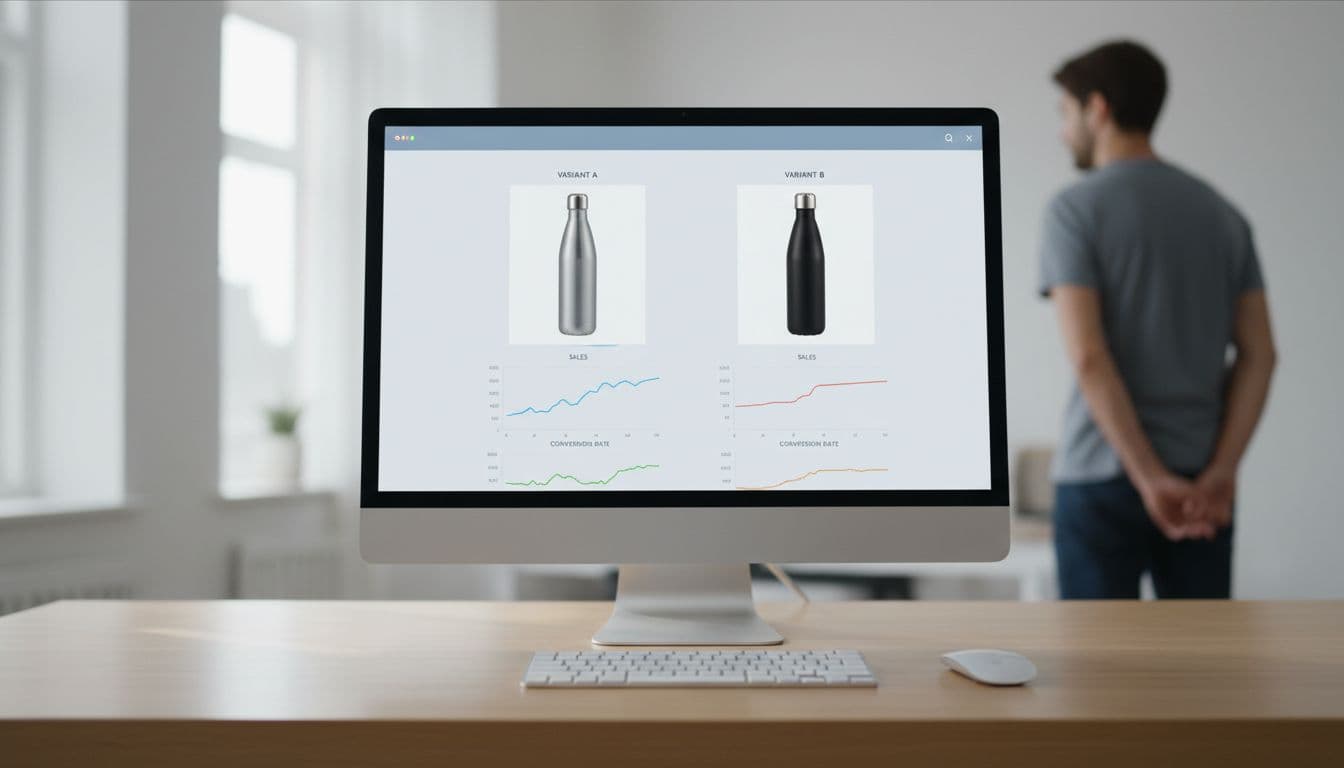
Native Amazon experiments vs third-party tools
The first split is not between brands. It is between native and third-party testing.
Amazon’s Manage Your Experiments page confirms that its built-in tool is available inside Seller Central for eligible sellers. In practice, it is best for Brand Registry accounts with steady traffic on a mature ASIN. You get live marketplace data, which is the closest thing to a clean answer on what drives more sales.
That said, native experiments are not quick. Public guides such as Kirro’s 2026 Amazon A/B testing overview point out the same trade-off sellers run into every year: strong data, but slow cycles and strict eligibility. If your ASIN has low sessions, the result can drag on or tell you very little.
Start with your highest-traffic ASIN. A test on a low-traffic listing usually creates noise, not insight.
Third-party tools solve different problems. Some help before launch, when there is no sales data yet. Others push traffic through ads or focus on price changes. That makes them useful, but it also means they are not direct substitutes for Amazon’s own experiment tool.

The third-party tools worth shortlisting
Splitly
Splitly is still the familiar name for sellers who want live listing experiments without staying inside Amazon’s native workflow. Public comparisons still describe tests for titles, images, bullets, and pricing. The upside is focus and ease of use. The drawback is pricing clarity. Current public pricing is hard to confirm, and older comparisons still cite entry pricing around $49 per month.
PickFu
PickFu is best when speed matters more than statistical purity. You can test hero images, titles, or full listing concepts with shopper panels in minutes. That is useful before launch or before you risk a live listing edit. Pricing starts around $50 per poll, so small teams can use it, but repeated polls add up fast. Its limit is obvious: opinions do not equal sales.
Jungle Ace
Jungle Ace’s split testing page positions it around PPC-based, first-party accurate testing for titles, images, and price. It also highlights unlimited tests and audience targeting. That makes it appealing for agencies and brands already deep in ads. Still, public pricing is not listed, so budgeting takes extra work.
SellerSnap
SellerSnap fits sellers where pricing is the main lever. Its core strength is AI repricing, with price experiments tied to sales and profit. That can matter in crowded categories where a small price move shifts the Buy Box. Public comparisons place it around $99 per month and up. The limit is scope, because it is not a full creative testing platform.
Viral Launch
Viral Launch is more of a research stack than a pure A/B testing tool. It can help you decide what to test by using keyword and market data, and that is valuable during launches. Public comparisons place plans around $59 per month. If you want a clean split-testing workflow for listing creatives, though, it is not the first pick.
AMZFinder
AMZFinder has lower visibility in 2026 seller conversations. Older comparisons still mention listing checks, alerts, and limited A/B-style support. That may suit a budget-conscious seller who wants simple utilities in one place. Still, public information on current split-testing depth is thin, so it is hard to recommend as a main testing system.
AMZTested
AMZTested is another tool with sparse public detail. The use case appears to be quick concept checks before a live listing change. Reported pricing ranges from about $30 to $60 per test, but current feature depth is not easy to verify. For that reason, it belongs in the “maybe” pile, not the default shortlist.
Pick the tool that matches your traffic
If you have Brand Registry and enough sessions, start with Amazon native experiments. That gives you the strongest answer, even if it takes longer.
If you are still shaping the listing, PickFu is the safer first pass. If your team lives in PPC, Jungle Ace is worth a close look. If price matters more than images or titles, SellerSnap makes more sense than a general listing tester.
Most sellers do not need one tool for everything. They need one tool for the next decision. In 2026, that usually means using Amazon for proof, a poll tool for fast creative feedback, and a price-focused platform only when margin and Buy Box pressure demand it.