

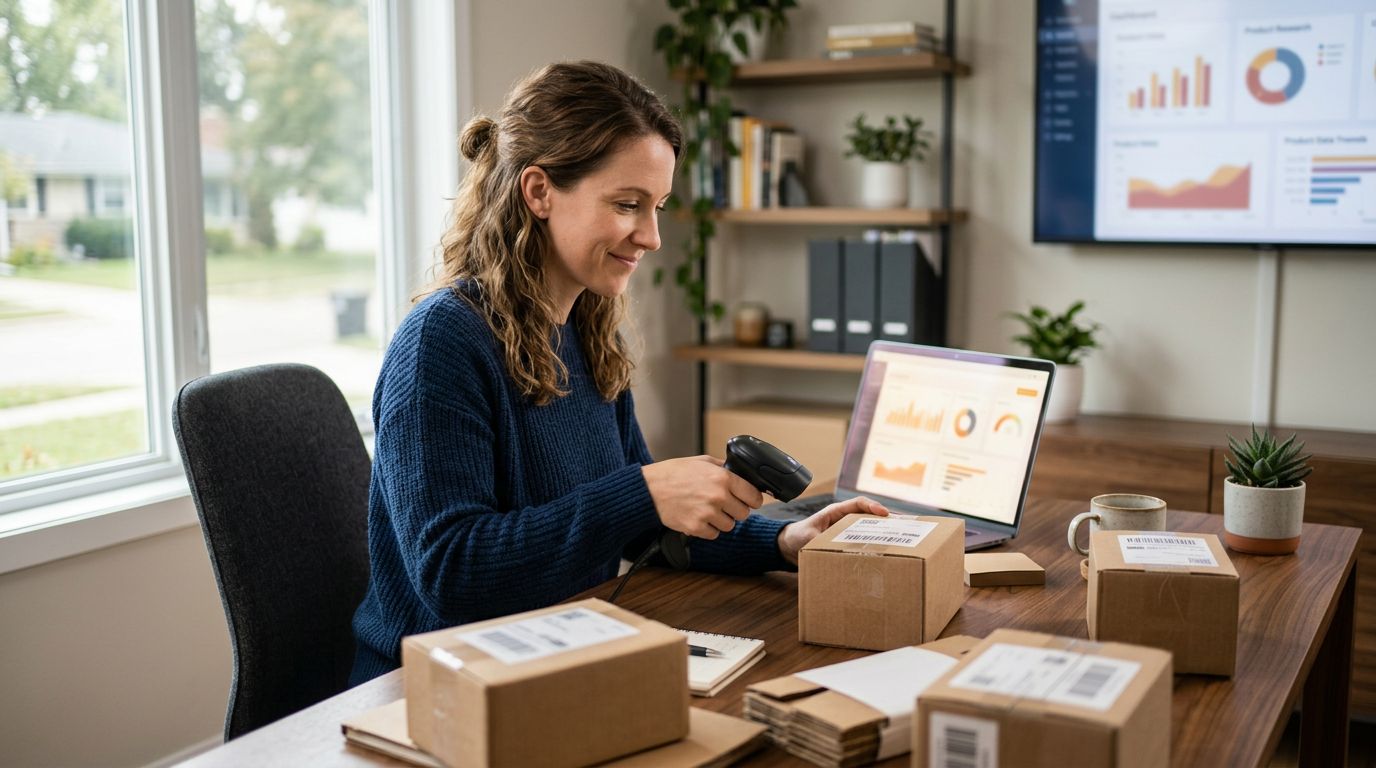
Can you run an Amazon business from your spare room in 2026? Yes, in many cases you can. But there’s a catch: Amazon FBA from home is not the same as storing a full warehouse at home.
For most beginners, home is the command center. You do product research, order samples, print labels, prep small batches, and send inventory to Amazon. What you usually don’t do, at least not for long, is stack months of stock in the garage and hope it scales smoothly.
What Amazon FBA from home really means
Amazon FBA from home usually means you manage the business at home, not that all your inventory stays there. Amazon still stores, ships, and handles much of the customer service after your products reach its fulfillment centers.
That distinction matters more in 2026. Industry coverage on Amazon’s policy change shows sellers now have to prep and label inventory before it arrives, because Amazon ended its inbound prep services in the US. So, if you work from home, you need to follow current FBA prep requirements for 2026 yourself, or hire a prep center.
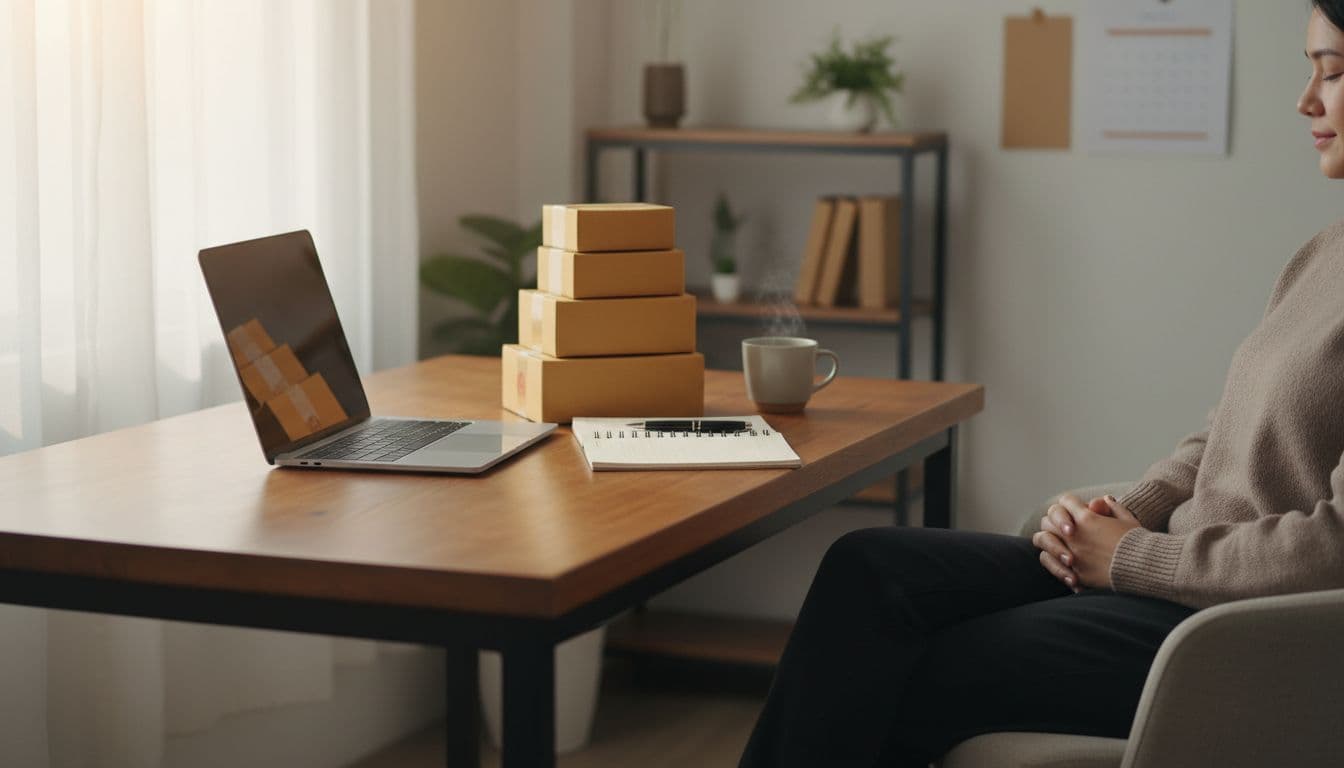
A small home setup can work well if you keep inventory light and organized. Think shelves, bins, a label printer, a scale, and room to pack a few boxes. On the other hand, if your living room starts looking like a loading dock, the model is starting to break.
Home-based FBA works best when your house is an office and prep station, not a warehouse.
Amazon doesn’t appear to have a special rule against home-based sellers. Still, your city, lease, HOA, or insurance policy might limit how much stock you can keep on-site. So, check local rules before you turn a guest room into storage.
When home-based FBA is practical, and when it isn’t
Home-based FBA is practical when products are small, simple, and easy to prep. Good examples include books, beauty accessories, kitchen tools, phone add-ons, or a small wholesale test order. These products fit on shelves and don’t take an hour to bag, wrap, and label.
It gets harder with bulky, fragile, meltable, liquid, or multi-part items. Those products eat up space fast, and prep mistakes become expensive. If you sell anything that needs special bagging, bubble wrap, or warning labels, review current Amazon packaging requirements before you ship.
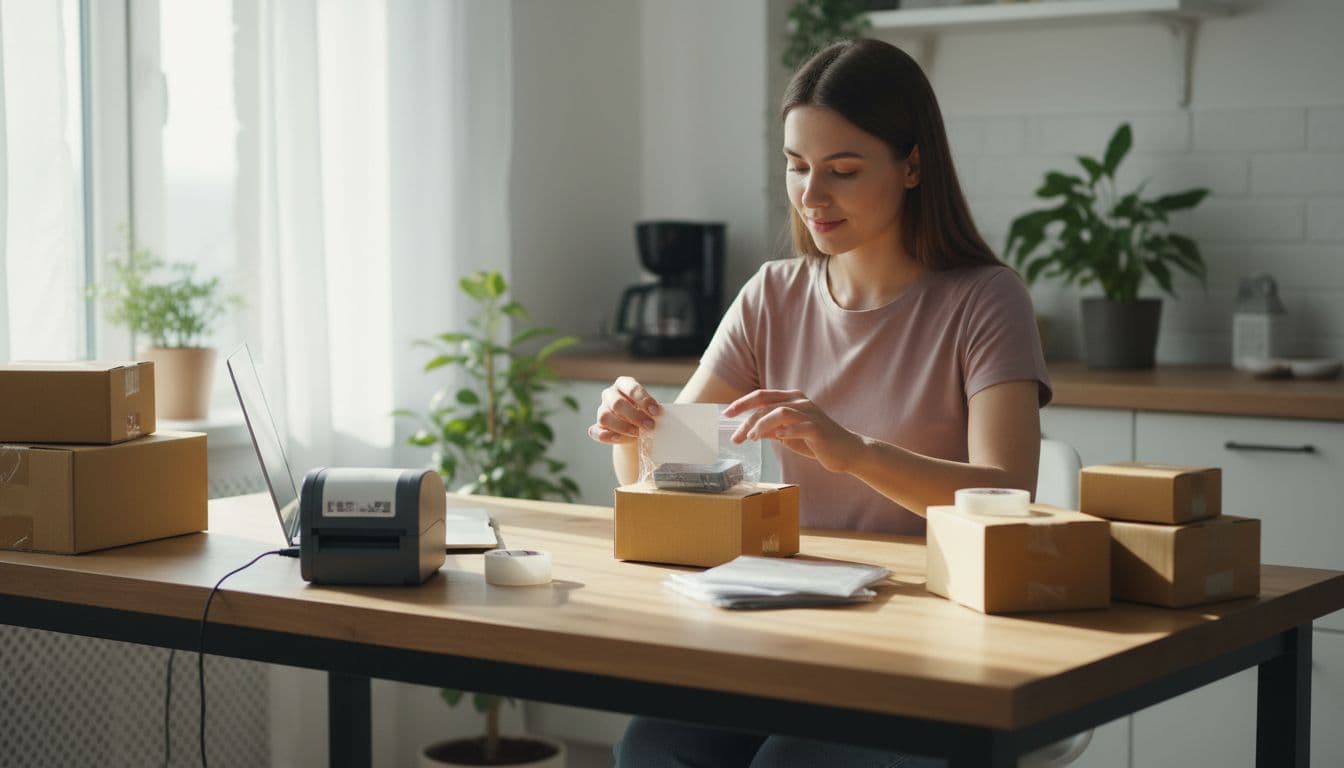
Here’s the balanced view:
- Pros: Low overhead, flexible hours, and close control over early mistakes.
- Cons: Limited space, more hands-on labor, and more room for clutter and family friction.
There’s also the Amazon side of storage to think about. Current 2026 reporting says Individual sellers are capped at 15 cubic feet of FBA storage. Professional sellers get limits based on sales and inventory performance. So, even if your home has space, Amazon may not want months of slow-moving stock.
Because of that, home sellers usually do best with small test batches and frequent restocking. It’s more like tending a garden than filling a barn.
Beginner costs and the space you’ll need
You don’t need a full warehouse budget to start Amazon FBA from home. Still, you do need more than pocket change.
This rough budget fits a small beginner launch:
| Cost item | Typical range |
|---|---|
| Seller plan and admin | $40 to $100 |
| Label printer, scale, tape, bags | $100 to $250 |
| Initial inventory | $300 to $1,500 |
| Shipping to Amazon | $50 to $300 |
| Samples, returns, misc. | $50 to $200 |
| Ads or coupons | $100 to $500 |
A lean test can start around $600 to $2,800. If you go private label, costs rise fast. A current Amazon FBA startup cost breakdown puts a more realistic private-label launch closer to $2,500 to $5,000.
Also plan for ongoing fees. Amazon takes referral fees on each sale, and slow inventory can trigger storage costs. Because of that, a cheap product with weak demand can cost more than a slightly pricier item that sells every week.
Space matters too, but less than most people think. Many beginners can start with one desk, one shelf, and a few storage bins. What matters most is having a clean area for labeling, boxing, and checking products before they ship.
How to start Amazon FBA from home in 2026
If you want to start without chaos, keep the first round simple.
- Pick a small, easy item. Avoid glass, large bundles, and products with many moving parts.
- Set up a basic workspace. You need a table, storage bins, a printer, tape, and good lighting.
- Start with a small batch. Ten to fifty units is enough to learn without filling the house.
- Prep every unit correctly. Print readable labels, seal items well, and box shipments neatly.
- Send inventory in waves. Restock winners, cut losers, and don’t overbuy early.
- Track limits and local rules. Watch your FBA storage cap, and check any home business restrictions.
Beginners often make the same mistake: they buy too much too soon. Then the boxes pile up, cash gets stuck, and the home setup stops feeling simple. In contrast, small batches let you learn faster. You can fix listing issues, improve prep, and test demand without turning the hallway into inventory overflow.
If your volume grows, you still don’t have to quit FBA. You just may need a different setup. Many sellers move prep to a garage, rented workspace, or third-party prep center once home space gets tight. That’s not failure. It’s the normal next step when the business outgrows the kitchen table.
The bottom line
So, can you do Amazon FBA from home in 2026? Yes, as long as you treat home as a small business base, not a full storage hub. Start lean, learn Amazon’s prep rules, and keep inventory under control. If your products stay small and your process stays organized, home can be a smart place to begin.